 Beaujolais Tours
Home › Guides › What Are the 10 Cru Beaujolais Wine Villages, from North to South?
What Are the 10 Cru Beaujolais Wine Villages, from North to South?
Cru Beaujolais is the name for the 10 northern appellations of a vineyard that runs about 55 km between Lyon and Mâcon, with its capital Villefranche-sur-Saône 35 km from Lyon. This page lists the 10 crus from north to south, explains what a cru is, and shows which tours from Lyon visit them.
Quick answer The 10 crus and the tours that visit them
Cru Beaujolais means the 10 northern appellations of Beaujolais, from Saint-Amour in the north to Côte de Brouilly in the south, all 100% red. Two tours from Lyon visit the crus, a 4.5-hour afternoon tour and a 6-7 hour full day.
Key takeaways
- The afternoon route is the Beaujolais Crus Wines and Castles Afternoon Tour, listed at $121.93 per person.
- The longer one is the Beaujolais Crus Full-Day Wine Tour, listed at $177.86 per person.
- Both leave from Place Bellecour in Lyon, and every option is on the beaujolais wine tours page.
- Not sure which crus suit you? Start with the crus afternoon tour, which names six of them.
Which Tours Visit the Cru Beaujolais Villages from Lyon?
These two tours go to the northern part of Beaujolais, where the crus are, instead of the southern golden-stone villages.
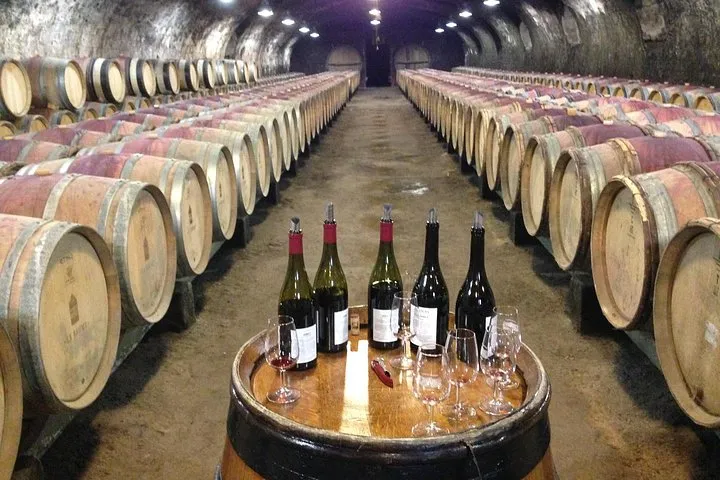 from $121.93
Beaujolais Crus Wines and Castles Afternoon Tour from Lyon
Afternoon cru tour for 8 guests, with a family winery and a château cellar and 9 to 10 wines.
Check Availability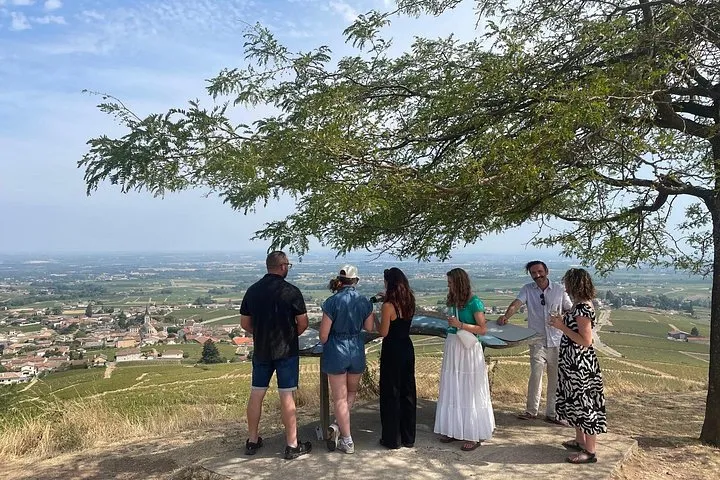 from $177.86
Most reviewed
Beaujolais Crus Full-Day Wine Tour from Lyon
A 6 to 7 hour day in the northern crus country in a group of up to 16, at the lowest full-day price.
Check AvailabilityWhat is a Beaujolais cru?
A Beaujolais cru is one of 10 named appellations in the north of the region, each a whole area and not a single vineyard.
Beaujolais has 12 appellations. Ten of them are crus. The whole region, with the Pierres Dorées, is on the Beaujolais wine region, and the new wine on Beaujolais Nouveau.
What makes an appellation a cru
The 12 Beaujolais appellations run from Beaujolais and Beaujolais Villages in the south to the crus in the north. The 10 crus are Brouilly, Chénas, Côte de Brouilly, Chiroubles, Fleurie, Juliénas, Morgon, Moulin-à-Vent, Régnié and Saint-Amour.
Unlike Burgundy, a Beaujolais cru is a whole area, not one vineyard.
What all 10 crus share
Beaujolais and Beaujolais Villages in the south make red, rosé and white wine. The 10 crus in the north are 100% red. Gamay covers 96% of the vineyard area and chardonnay about 4%.
Sources: Inter Beaujolais, Inter Beaujolais.
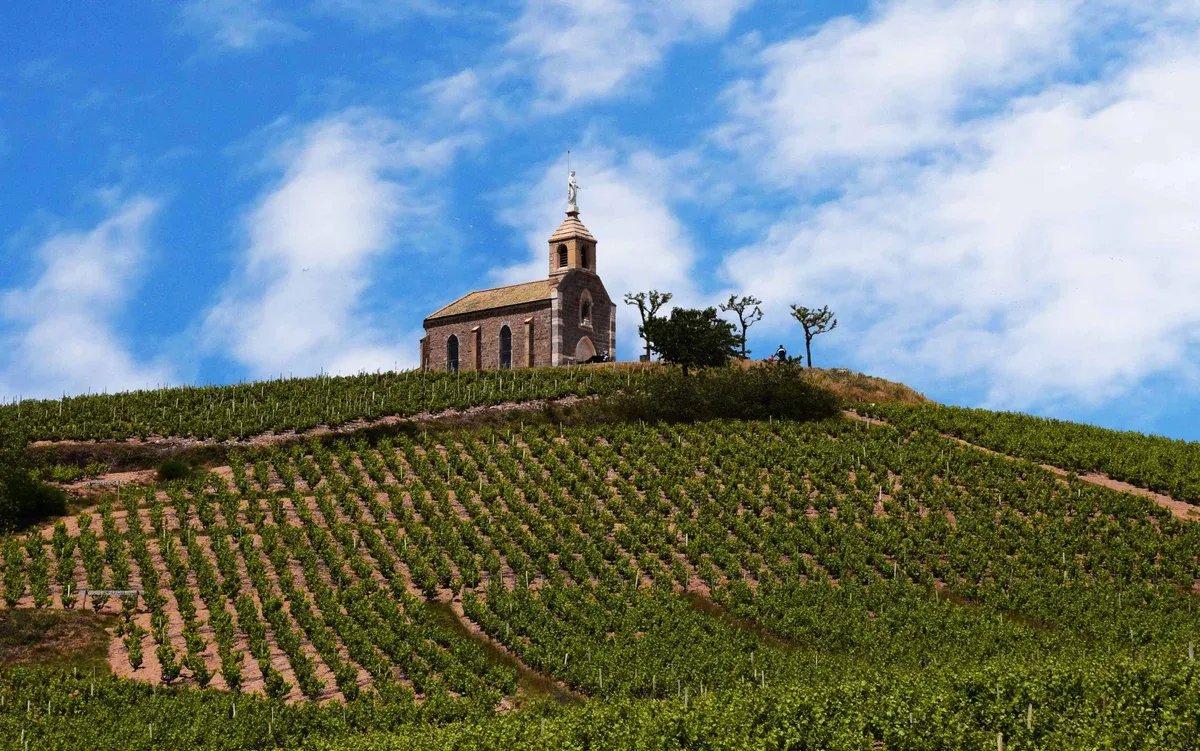
La Madone chapel above the vineyards of Fleurie. Photo: René Boncompain, CC BY-SA 4.0, via Wikimedia Commons
What does cru mean in wine?
In Beaujolais cru means a whole named area, and the 10 crus sit above Beaujolais and Beaujolais Villages.
The word is used differently from Burgundy, where it points at single vineyards.
Cru on a Beaujolais label
Seven crus are named after villages. Brouilly and Côte de Brouilly sit around Mont Brouilly, and Moulin-à-Vent is named after a windmill that dates from the 15th century. When you see one of these names on a bottle, you know which area in the north the wine comes from.
Source: Inter Beaujolais.
Map of the 10 Beaujolais Crus
The ten crus from Saint-Amour in the north to Côte de Brouilly in the south, with Beaujeu and Villefranche-sur-Saône. Tap a pin for the cru.
Pins from OpenStreetMap.
What are the 10 crus of Beaujolais wine?
From north to south they are Saint-Amour, Juliénas, Chénas, Moulin-à-Vent, Fleurie, Chiroubles, Morgon, Régnié, Brouilly and Côte de Brouilly.
The table gives each cru's area and the facts that separate it, so you can plan which villages to see.
The 10 crus, north to south
Hectares and winegrowers are the figures Inter Beaujolais prints for each cru. Brouilly is described by its communes and output instead.
| Cru | Hectares | Where | What to know |
|---|---|---|---|
| Saint-Amour | 310 | Saint-Amour-Bellevue, Saône-et-Loire | Northernmost cru, about a hundred producers |
| Juliénas | 575 | Four communes, mostly in the Rhône | A small part lies in Saône-et-Loire |
| Chénas | 250 | Chénas and La Chapelle-de-Guinchay | Smallest Beaujolais appellation, more than 120 winegrowers |
| Moulin-à-Vent | 640 | Romanèche-Thorins and Chénas | About 300 winegrowers, over 1.5 million bottles a year |
| Fleurie | 840 | Fleurie | Pink granite is about 90% of the terroir, about 150 winegrowers |
| Chiroubles | 315 | Not stated | Pink granite, vines at 270 to 600 metres, harvest about a week later |
| Morgon | 1,090 | Villié-Morgon | Granite 52%, blue stone 37%, piedmont deposits 11%, about 250 winegrowers |
| Régnié | 550 | Régnié-Durette and Lantignié | Recognised in 1988 as the tenth cru |
| Brouilly | Not stated | Six communes: Odenas, Quincié-en-Beaujolais, Saint-Lager, Saint-Étienne-la-Varenne, Cercié and Charentay | AOC since 1938, over 8 million bottles a year |
| Côte de Brouilly | 310 | Saint-Lager, Odenas, Quincié-en-Beaujolais and Cercié | Slopes of Mont Brouilly, over 100 winegrowers |
Sources: Inter Beaujolais, Inter Beaujolais, Inter Beaujolais, Inter Beaujolais, Inter Beaujolais, Inter Beaujolais, Inter Beaujolais, Inter Beaujolais, Inter Beaujolais, Inter Beaujolais.
What are the different crus of Beaujolais?
They differ in size, soil, altitude and the day the grapes are picked, with the nine crus that have a stated area running from 250 hectares at Chénas to 1,090 at Morgon.
Without ranking them, the official facts show four ways the crus differ.
Size and soil
Chénas is the smallest Beaujolais appellation at 250 hectares. Morgon covers 1,090 hectares on granite, blue stone and piedmont deposits. Fleurie sits on pink granite, and some of its slopes have a 50% gradient. La Madone, the hill above its vines, reaches 425 metres.
Over the whole region, soils run from granite and schist in the north to clay-limestone in the Pierres Dorées in the south.
Altitude and timing
Chiroubles vines are planted between 270 and 600 metres, and its harvest comes about a week later than elsewhere in Beaujolais. Mont Brouilly culminates at 484 metres, and the Chapelle Notre-Dame-des-Raisins on top has watched over the Côte de Brouilly harvests since 1854. Blue rock of volcanic origin lies under the vines of Mont Brouilly.
Where the crus sit in the Beaujolais ladder
Appellation Beaujolais covers 3,930 hectares in 72 communes and Beaujolais Villages 3,390 hectares in 38 communes. Only those two may make Beaujolais Nouveau. The crus stay above them as the 10 northern appellations.
Sources: Inter Beaujolais, Inter Beaujolais, Inter Beaujolais, Inter Beaujolais, Destination Beaujolais, Inter Beaujolais, Inter Beaujolais, Inter Beaujolais.
Can I visit the Beaujolais crus from Lyon?
Yes, the crus afternoon tour and the full-day crus tour both leave from Place Bellecour, and Villefranche-sur-Saône, the gateway to the north, is 35 km and about 40 minutes by car.
There are two tours from Lyon and one way to go on your own.
On a tour from Lyon
The Beaujolais Crus Wines and Castles Afternoon Tour from Lyon lists Brouilly, Morgon, Chiroubles, Fleurie, Moulin-à-Vent and Juliénas and more. It runs 4.5 hours, leaves at 2:00 PM and is back at about 6:30 PM. You taste 9 to 10 wines at a small family winery and in the cellar of a château estate, with up to 8 travelers in a minibus. It is listed at $121.93 per person.
The Beaujolais Crus Full-Day Wine Tour from Lyon goes to the northern hills of the Beaujolais wine region and lasts 6 to 7 hours for up to 16 travelers. Lunch is not included. It is listed at $177.86 per person. Neither listing names its estates, so the estates change by day. Both carry free cancellation 24h.
For other days, see all beaujolais wine tours.
On your own
A TER train reaches Villefranche-sur-Saône from Lyon Part-Dieu or Perrache in about 25 minutes, and TER also stops at Romanèche-Thorins, the home of the Hameau Duboeuf wine park in the Moulin-à-Vent area. The park is open Wednesday to Sunday from 9:30 to 19:00, with last entry at 17:00. The Fleurie tourist office is at 52 rue des Crus and is open Wednesday to Saturday from 9:30 to 12:30 and 14:00 to 18:00 from May to September.
Drive only if you are sober: the French limit is 0.5 g/L.
Sources: Destination Beaujolais, Hameau Duboeuf, Destination Beaujolais, Service-Public.fr.
When is the best time to visit the cru villages?
From May to September the crus around Villié-Morgon average daytime highs of 19.5 to 25.8°C, with 9.6 to 12.5 hours of sunshine a day.
Climate figures for the Morgon area show how the seasons change a day among the vines.
Month by month around Villié-Morgon
The average for each month comes from a 30-year reanalysis. July is the sunniest month in the table and January the dullest.
| Month | High | Low | Rain | Sunshine a day |
|---|---|---|---|---|
| January | 6.4°C | 0.4°C | 80 mm over 13.4 days | 4.7 hours |
| May | 19.5°C | 10.1°C | 103 mm over 13.6 days | 10.8 hours |
| July | 25.8°C | 15.9°C | 93 mm over 10.8 days | 12.5 hours |
| September | 21.4°C | 12.4°C | 87 mm over 9.5 days | 9.6 hours |
| October | 16.9°C | 9.0°C | 107 mm over 11.5 days | 7.4 hours |
Source: Copernicus ERA5.
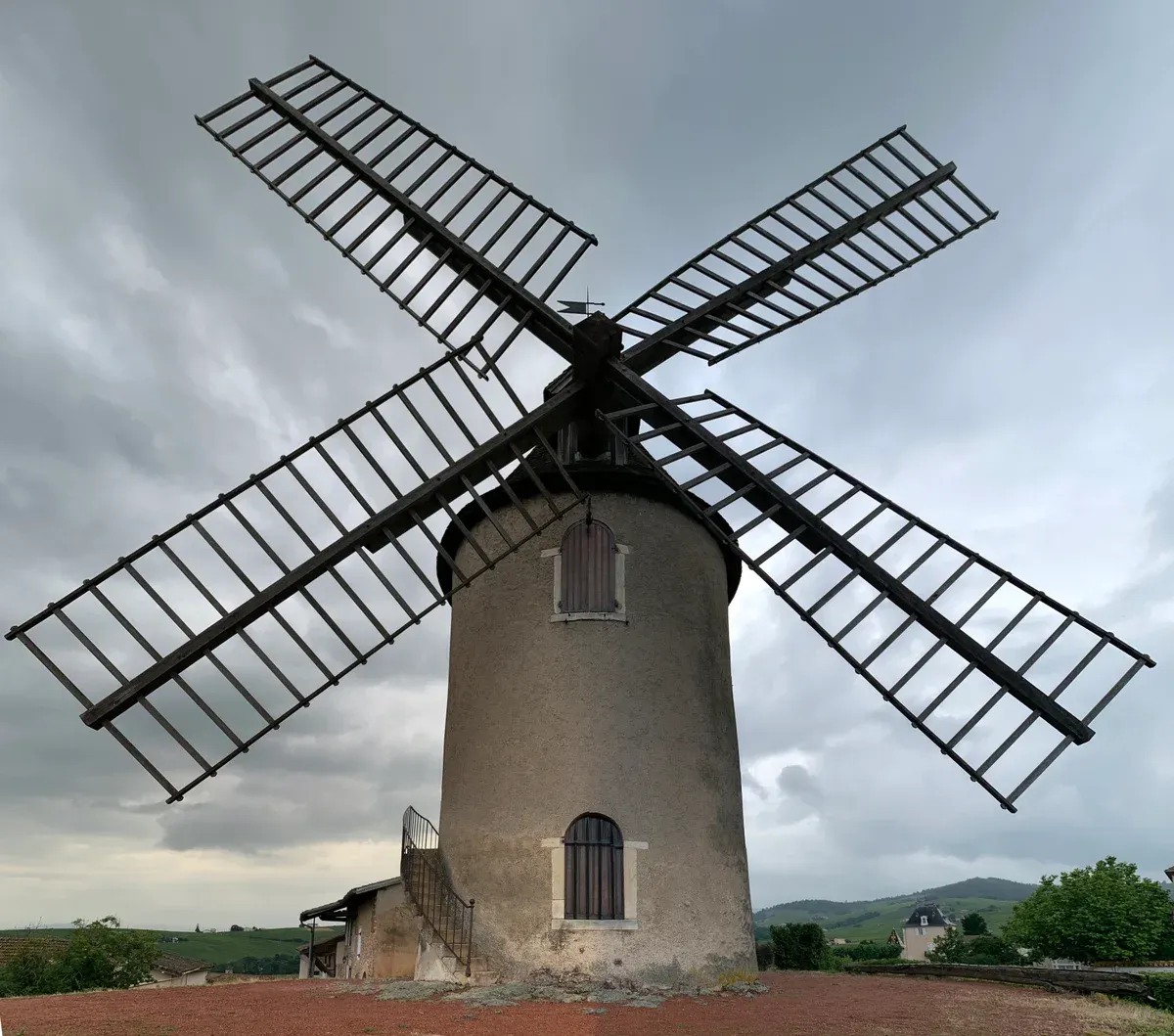
The Moulin à Vent windmill in Romanèche-Thorins, which gives the cru its name. Photo: Chabe01, CC BY-SA 4.0, via Wikimedia Commons
Cru Beaujolais FAQ
Are all cru Beaujolais wines red?
Yes. The 10 crus in the north are 100% red, while Beaujolais and Beaujolais Villages also make rosé and white. See the red-wine tastings on the crus afternoon tour.
Which Beaujolais cru is the youngest?
Régnié was recognised in 1988 as the tenth cru. Brouilly has been an AOC since 1938. Both are covered on the beaujolais wine tours page.
Are there premier crus in Beaujolais?
Fleurie, Moulin-à-Vent and Brouilly have applied for recognition of their best named plots as premier cru. You can taste in these areas on the full-day crus tour.
Is Beaujolais Nouveau a cru?
No. Only the Beaujolais and Beaujolais Villages appellations may make Beaujolais Nouveau, so the crus are not part of it. Read more on the beaujolais wine tours page.
How big is the Beaujolais vineyard?
Inter Beaujolais counts 12,520 hectares of vines across the 12 appellations and 96 communes. See how to visit it on the beaujolais wine tours page.
How far is the Beaujolais vineyard from Lyon?
The vineyard is less than a 30-minute drive from Lyon, according to Inter Beaujolais. Villefranche-sur-Saône is 35 km away. Tours start at Place Bellecour, as on the crus afternoon tour.
More Guides
- Beaujolais Wine Region: Map, Appellations and Where the Tours Go
Beaujolais wine region in 2027: a 55 km strip with 12 appellations, 25 minutes by TER from Lyon. Compare tours.
- Beaujolais Land Rover Tour: Vintage Defender Wine Days from Lyon
Beaujolais Land Rover tour in 2027: four private vintage days of 4 or 8 hours, from $223.73. See the prices.
- Beaujolais Nouveau 2026 and 2027: Release Day and Where to Taste the New Wine
Beaujolais Nouveau in 2027: released on the third Thursday of November, with the Sarmentelles in Beaujeu. Check dates.